


Welcome to the Embassy of Lebanon in Ottawa, Canada
The Lebanon Embassy in Ottawa serves as a vital link between Lebanon and Canada, providing essential services and information to the Lebanese community and fostering diplomatic relations.
Announcements
The Embassy of Lebanon in Ottawa is pleased to announce the appointment of His Excellency
Bachir Tawk as the new Ambassador of Lebanon to Canada.
Ambassador Tawk, who assumed his duties upon his arrival in Ottawa on November 10, brings a strong commitment to deepening the longstanding friendship between Lebanon and Canada and advancing cooperation across diplomatic, cultural, and economic fields.
Together with the Embassy team, Ambassador Tawk will continue to strengthen the partnership and engagement with the Lebanese community in Canada and with Canadian counterparts
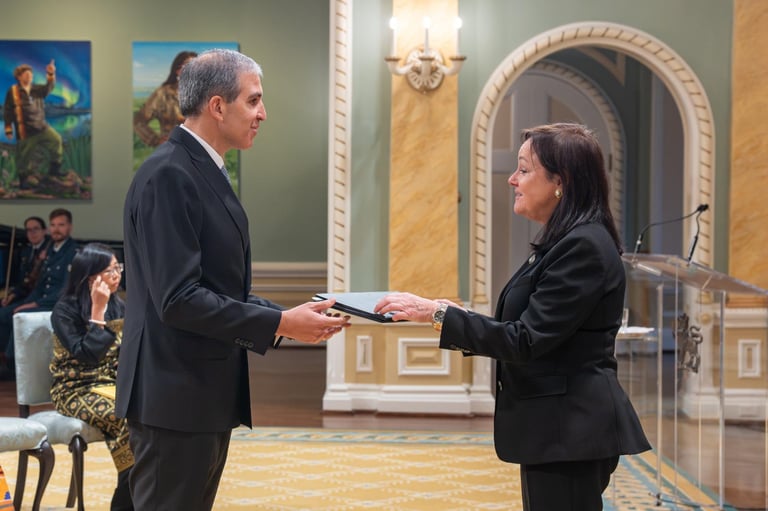
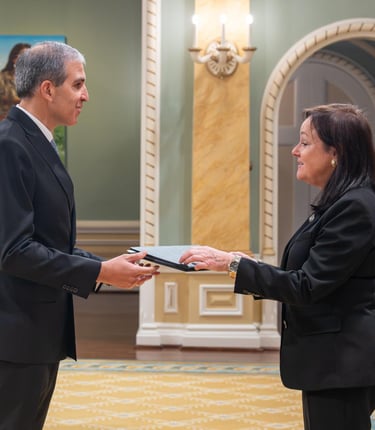
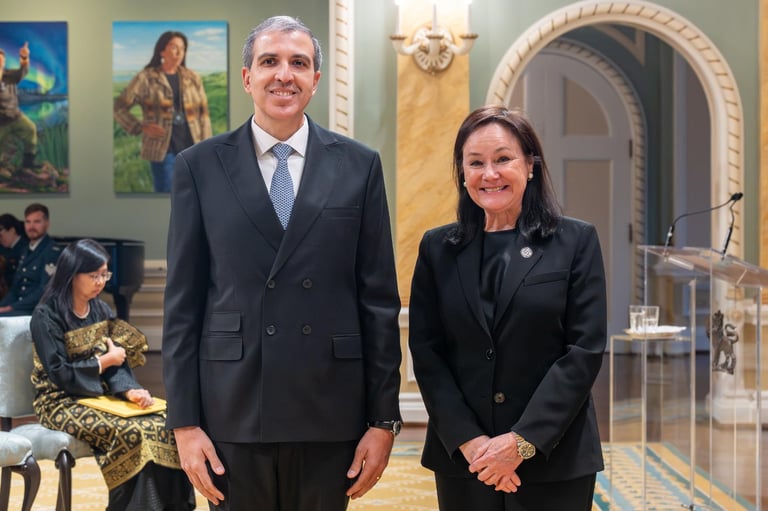
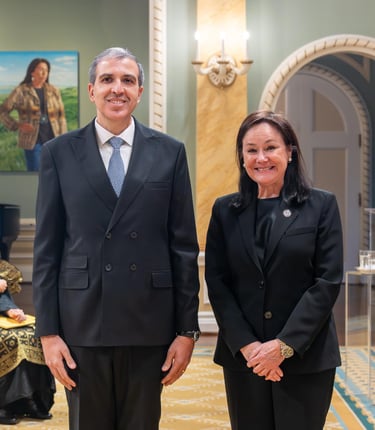
On November 25, 2025, His Excellency Bachir Tawk, Ambassador of the Lebanese Republic to Canada, presented his letters of credence to the Honourable Suzanne Côté, Justice of the Supreme Court of Canada and representative of Her Excellency the Right Honourable Mary Simon, Governor General of Canada, during an official ceremony held at Rideau Hall.
Electronic Civil Extract (إخراج قيد)
You can now request an Electronic Civil Extract (إخراج قيد) from the Embassy of Lebanon in Ottawa.
The Embassy of Lebanon in Ottawa informs the esteemed citizens that
Due to the high volume of civil status registration applications, please allow 70 days from the date of submission before following up with the Embassy.
Thank you for your understanding.
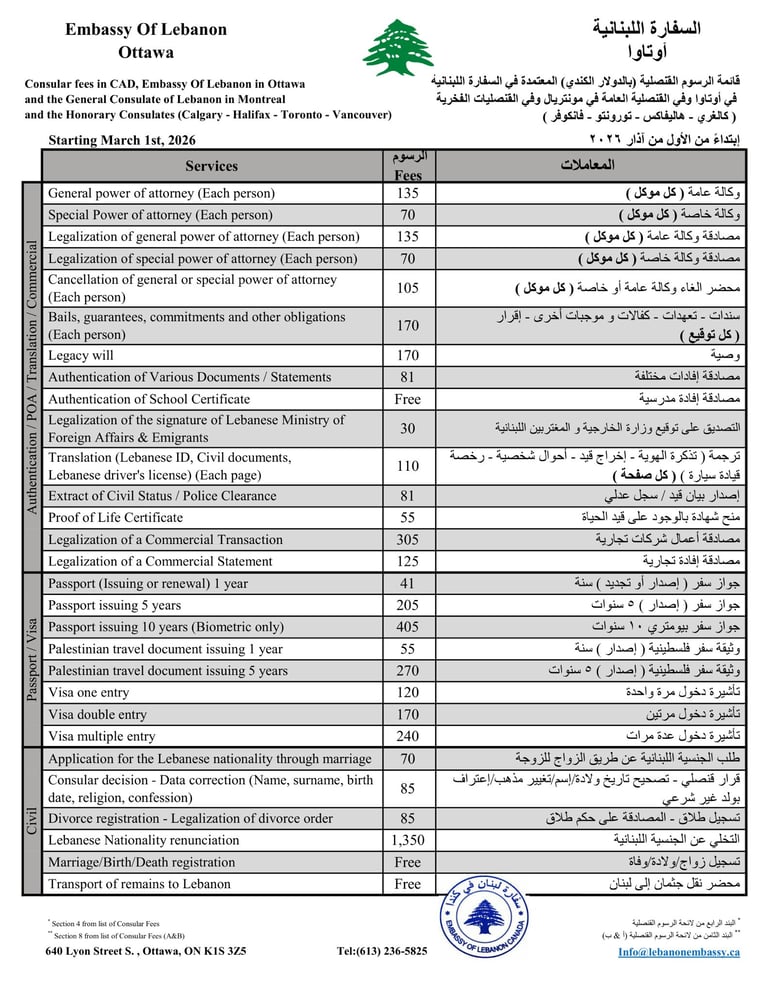
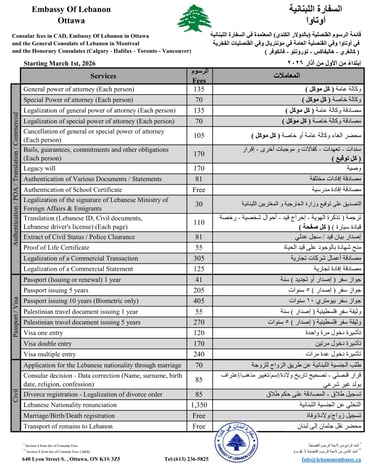
New list of Consular fees in Canadian dollars starting March 1, 2026


On Wednesday, 28 January 2026, I had the distinct honour of a private tête-à-tête with the Governor General of Canada, Her Excellency the Right Honourable Mary May Simon, at Rideau Hall.
This closed-door meeting provided a meaningful platform to discuss new pathways for strengthening bilateral relations between Lebanon and Canada.
This courtesy visit was arranged following the inability to meet with Her Excellency the Governor General on November 25 2025. The credentials presentation ceremony was conducted on that date with the Honourable Judge Côté presiding in her absence. The meeting was conducted in a very cordial and welcoming atmosphere, reflecting the strong bilateral relations between Lebanon and Canada.
I expressed sincere gratitude for Canada’s steadfast support of Lebanon and acknowledged the vital role of the Lebanese-Canadian community as a bridge between our two nations, fostering cultural, economic, and diplomatic ties.
I reaffirmed Lebanon’s commitment to maintaining and strengthening cooperation between our two countries across all sectors of mutual interest. The presence of Ms. Stefanie McCollum, as Regional Director for the Middle East, underscores the importance Canada places on its relationship with Lebanon.
GG07 series:
MS Anne-Marie Brisson, Rideau Hall ©️ OSGG, 2026
Our Services
Explore a range of services provided by the Lebanese Embassy in Ottawa for citizens and visitors.


Contact Us
Reach out for inquiries
Embassy Business Hours
Monday to Friday
9:00am - 3:00pm
© 2026 All rights reserved.
Contact
Address
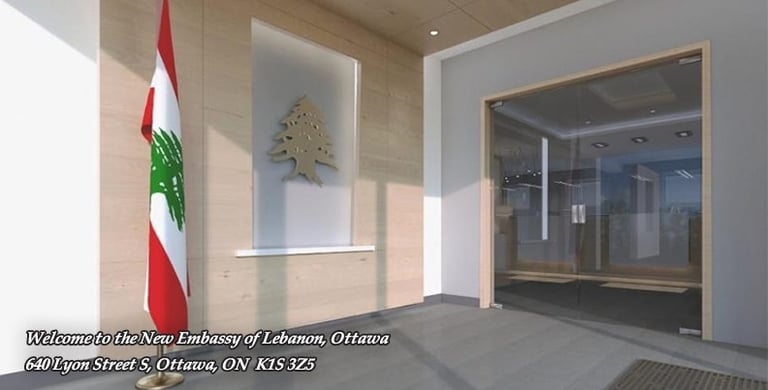
640 Lyon St. S
Ottawa, ON K1S 3Z5